 020 8998 8775









 Made in London.
Manufacturing windows & doors for the trade since 1980
Made in London.
Manufacturing windows & doors for the trade since 1980Urban noise is a part of life for many homeowners, particularly across London and the South East. Busy roads, established flight paths and the way airspace is managed all shape the sound environment around homes, especially in built-up areas. For these households, this is not a new challenge – it’s something they have learned to live with.
What tends to prompt action is not the presence of noise itself, but the point at which it starts to affect comfort more noticeably. In certain postcodes, replacement window enquiries are driven by this shift. Alongside thermal performance and security, sound reduction has become a defining part of the conversation.
In those discussions, laminated and dB-rated acoustic glass often comes up early. The challenge is rarely explaining what acoustic glass is. It’s understanding how different specifications perform once installed, and how the frame and glazing work together to reduce what people hear inside the home.
This has become particularly relevant in and around London as airspace continues to evolve. The proposed addition of a third runway at Heathrow, ongoing programmes of airspace redesign and route modernisation, such as Gatwick’s Route 4 departure route, have brought renewed attention to aircraft noise in certain areas. In many cases, this hasn’t introduced noise for the first time, but has the potential to alter frequency, direction or intensity. Whether a homeowner is responding to aircraft noise now, or anticipating what route concentration could mean in future, the practical question is the same. “How do I reduce the noise in my home?”
Why acoustic glazing is different from thicker glass
A common misconception is that noise reduction is simply a matter of using thicker glass. While thickness plays a role, acoustic performance is more nuanced than that. Effective acoustic glazing works by reducing vibration transfer and disrupting sound waves across multiple frequencies.
Laminated glass is central to this process. By bonding two panes together with a specialist acoustic interlayer, vibration is dampened before it can pass through the unit. This is why laminated glass windows consistently outperform standard monolithic panes when it comes to reducing disturbance from external noise.
Asymmetry also makes a significant difference. Units that combine different pane thicknesses perform more effectively than those with equal panes, particularly against low-frequency noise. Traffic and aircraft noise tend to sit in these lower ranges, which is why acoustic glazing designed around real-world conditions delivers more noticeable results than a simple thickness upgrade alone.
Understanding dB ratings in practical terms
Decibel ratings are often referenced but rarely explained in a way that connects with lived experience. Because decibels are measured on a logarithmic scale, relatively small numerical changes can represent a meaningful difference in perceived loudness.
Most acoustic glazing is rated using Rw values, sometimes alongside Rw + Ctr, which provides a better indication of performance against low-frequency noise such as traffic and aircraft. While these figures are useful, they do not tell the whole story.
What matters in practice is how the specification aligns with the dominant noise source. Continuous road noise behaves very differently from intermittent overhead aircraft. A unit that performs well in laboratory conditions but does not address low-frequency vibration may underperform once fitted. This is why dB-rated glass should always be considered in context, rather than as a standalone number.
Matching the specification to the noise environment
In areas affected by heavy traffic, the challenge is often reducing a constant, low-level hum that carries through walls and glazing. Here, laminated acoustic units with asymmetric construction tend to deliver the most consistent improvement.
Flight path noise presents a different challenge. Peaks of sound, combined with vibration, can be particularly disruptive even when they are not constant. In these situations, sealing quality, frame rigidity, and correct installation become just as important as the glass specification itself.
The most reliable outcomes come from addressing the entire system rather than relying on a single upgrade.
The role of the frame in acoustic performance
Acoustic glazing is only as effective as the system supporting it. Sound will always take the easiest route, which means gaps, weak seals and inconsistent tolerances can undo even the best glass specification.
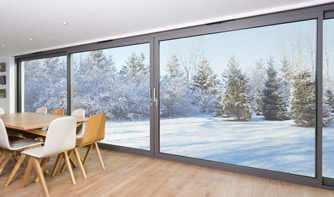
With aluminium systems, strength and rigidity allow heavier acoustic units to be accommodated without flex or compromise. Consistent tolerances help seals perform as intended, maintaining pressure and contact over time rather than relaxing with use. Our MOD Series aluminium systems are engineered with this in mind, supporting acoustic specifications, while retaining the slim sightlines expected from contemporary aluminium glazing. When the door or window closes, it should do so with confidence, not with movement that gradually introduces micro-gaps.
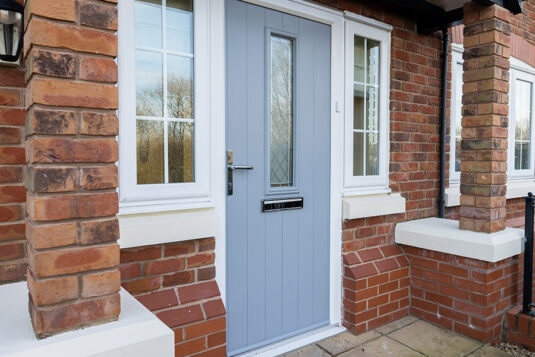
uPVC remains a strong choice for noise reduction in many residential settings. Multi-chamber profiles and effective compression sealing can work in favour of acoustic performance when paired with the correct glass. Our One Collection uPVC window and door systems are built around predictability and consistency, which matters in real installations. Less on-site adjustment, cleaner fit and reliable sealing pressure translate into fewer weak points. This is how a good glass specification becomes a result that is genuinely felt inside the home.
Installation discipline makes the difference
In acoustic performance, details matter. Even small inconsistencies at the perimeter can undermine the overall outcome. Clean preparation, accurate fitting and proper sealing at junctions are what turn a specification into a noticeable improvement in day-to-day comfort.
When everything works together, laminated glass reduces vibration, asymmetric units disrupt sound transmission, and the frame and seals prevent leakage paths – the result is a clear reduction in disruption.
Bringing it together
Laminated and dB-rated glass delivers its greatest impact when supported by a well-engineered system. Traffic noise, aircraft disturbance and general urban sound all behave differently, which is why one-size-fits-all solutions rarely deliver consistent results. By treating acoustic performance as a system outcome rather than a single upgrade, glazing becomes a genuine improvement to everyday comfort. In environments where noise is simply part of the backdrop, that improvement is both noticeable and valued.
For projects where noise reduction is a key consideration, Everglade Windows’ aluminium and uPVC systems are engineered to support laminated and dB-rated glass specifications with confidence. Get in touch with our expert team for further information.